Table Of Content

See how you may be able to save money on your homeowners policy if you bundle multiple policies, install smart home technology or have a "green" home. As well as go outside of your house, check your backyard, and view any prior things that need to be done to protect your house from outside. Regularly changing the filters in your central air and heating system can significantly improve its efficiency and longevity, while easing the pressure on your wallet. In case of a power outage, fuel shortage, or other wintertime crises, you’ll need a kit with the following emergency items. Keep your home cozy and your energy bill low this winter by following these tips to winterize your home.
Seal Doors & Windows
Once you understand the different ways to weatherize a home, including windows, weatherstripping and more, shop our selection online. This means that you’ll only ever have two fields with crops planted — for a total of 0.6 morgen worth of crops. That just so happens to be about how much a family can manage in a year.
2. Clear the gutters
Here are some tips to consider to help you avoid damage to or loss of your property. Cracks in windows & doors can make a clear way for cold breezing winds into your house which makes it an important issue to be fixed ASAP. Windows caulking is an easy and cheap fix and should be considered the first job while winterizing a house.
Help Avoid Water Damage by Turning Off Your Water Supply
While you’re are it, examine the supply lines for cracks, bulges, and leaks, replacing anything that looks iffy. The main shutoff valve will likely be in the basement, towards the front of the house. A ball valve requires just a quarter turn to the right to close, while a gate valve may need several clockwise turns to stop the water supply.
Tips
Fresh snowfall can make your outdoor view a beautiful one, but feeling a cold draft through that window will quickly take all the fun out of it for most homeowners. This guide will explain how to winterize a house before the howling, icy winds arrive. Increased rain, snow, and ice can be particularly dangerous for walkways and driveways. It’s important to keep these areas clear and inspect any steps or railings for damage when winterizing your home. You may want to keep a deicing solution like salt, sand, or pellets on hand to clear these areas throughout the season.
Frost King1-1/2-in x 36-in White Self Stick Door Sweep
Slipped slates or tiles, failing leadwork and roof valleys blocked by debris will all wreak havoc if neglected,’ says Roger Hunt, author of the Old House Handbook. If you have a generator, ensure you have enough fuel and that it’s working properly before you rely on it. To check the cost of installing a whole-house backup generator in your area, refer to our generator installation cost guide. Winterizing your home if you live in a colder climate is crucial to protecting your home from sustaining serious and costly damage. By remaining mindful of these key details and spending a bit of money where necessary, you can avoid expensive repairs down the line.
Share these home winterizing tips
This can lead to costly water damage inside your home from basement leaks. If you’re unsure about how to maintain your gutters, look into a professional gutter service. “I recommend winterizing outdoor irrigation systems, drain and shut off outdoor water sources, and disconnect and store garden hoses to prevent freezing and damage,” advises Bidwell.
11 Ways to Winterize Your Home on a Budget - Bob Vila
11 Ways to Winterize Your Home on a Budget.
Posted: Mon, 16 Nov 2020 08:00:00 GMT [source]
Meanwhile, you’ll always have one fallow field that’s resetting its fertility. Over time, planting the same crop over and over will reduce the fertility (and productivity) of a field. To avoid that, you’ve got a couple options, but the easiest is just to rotate your crops. While the farm plots might look small, even just 0.6 morgen of wheat field grows enough wheat (to turn into grain to turn into flour to turn into bread) to feed a town of 100 people and still have a surplus.
Clean your gutters
You can also consider installing gutter guards that cover your gutters and help collect debris, making cleanup that much easier. A dreaded ice dam can develop when melted snow pools and refreezes along the roofline. Ice dams prevent proper drainage off the roof and through the gutters, allowing moisture to seep under shingles and into the house. Avoid flooding and a messy cleanup by insulating your water pipes with materials such as heating tape and fiberglass. Most water damage that homeowners experience is the result of leaks in pipes and connections frequently due to maintenance issues.
As you prepare for winter, following are some additional safety measures that can be effective preventive steps to take before the cold season begins. Keep the paths to your house and sidewalks clear of ice and snow and fix any issues with the steps and handrails. You can use salt from your kitchen and sprinkle it on the steps, sidewalks, path to your house and driveways, and on handrails. A particular way of doing this is by turning off all faucets and valves, before checking the water meter (where it indicates how many cubic feet are you at). Maybe the most frequent problem that occurs in the cold months is the freezing of the pipes.
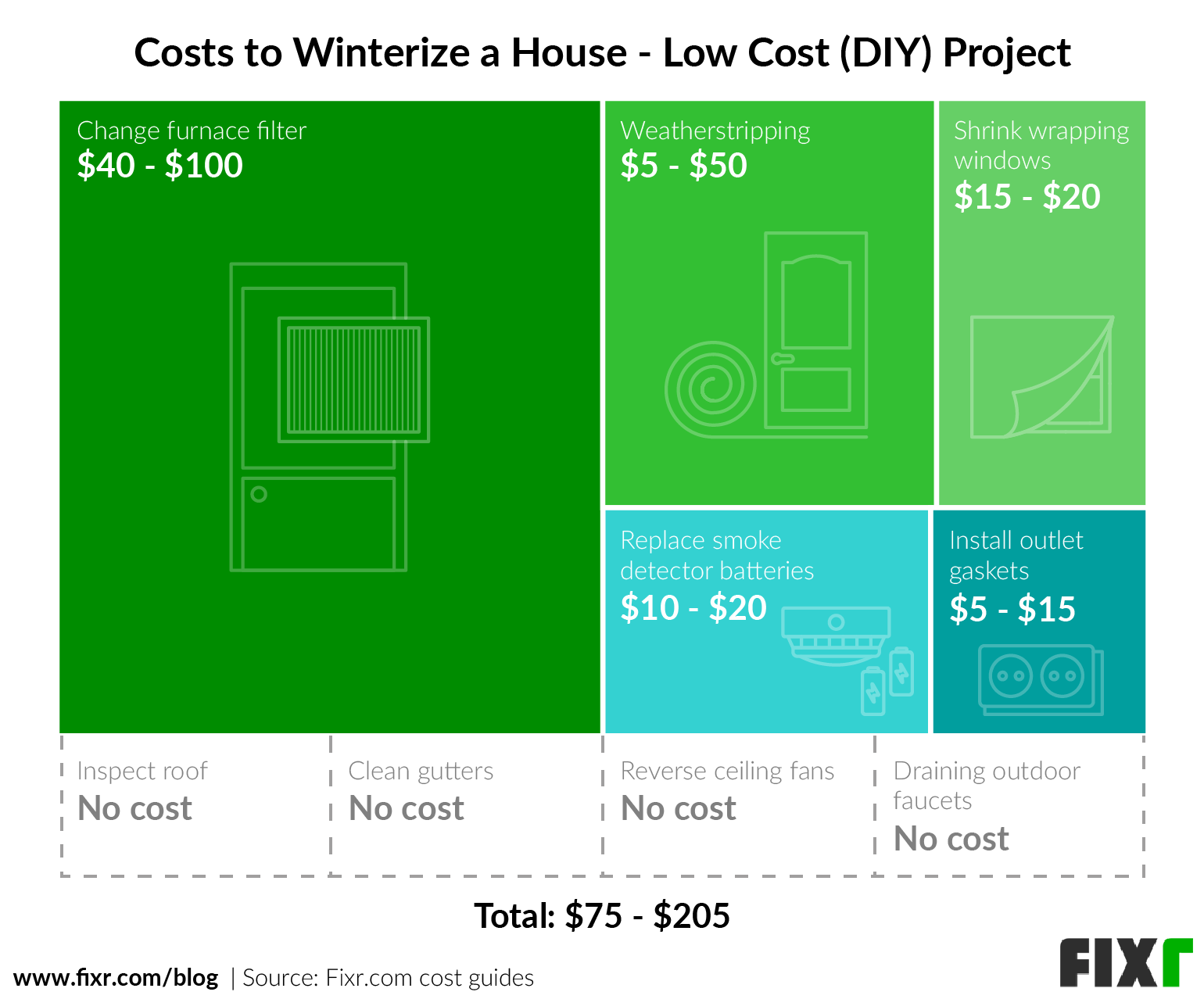
Setting the thermostat at 50 to 55 degrees Fahrenheit can save your pipe from freezing damage and also keep your house at a mild temperature with warm air. In addition, having your gutters clear and your roof inspected can help prevent ice dams. Ice dams are caused when heat escapes through your roof and melts the snow. An ice dam can potentially damage your roof shingles or cause leaks on the attic floor or upper levels in your home. Many of the above steps, such as keeping your lawn and walkways clear, shouldn’t cost you anything. Other steps like repairing roof damage, sealing up holes and cleaning out your gutters may run you a few hundred dollars in total, whether or not you enlist a professional service to take care of it.
However if the cracks are more major, you are likely to need professional help. It is also worth considering installing a chimney cap or cowl as part of your efforts to winterize a house as this will reduce downdrafts and improve your stove's efficiency. In addition to taking the appropriate steps to protect a home for the seasonal change, you’ll want to take a few extra steps if you’re selling your home.
The Department of Energy recommends performing a visual inspection as well as a simple pressurization test to discover where external air is entering your home. If you find a leak, use caulk and weather stripping to seal and prevent cold air from entering. Check all the window frames and doors in your home for cracks where cold air could come through. You should be able to feel cold drafts in these areas, which can help you determine what needs to be sealed.
For example, when water freezes, it expands in volume as it becomes ice, and the resulting damage can lead to leaks or worse, a burst pipe. If your home isn’t properly sealed, it could also leak out from other areas as well. “Before winter begins, examine all fenestrations—windows or doors—and their surrounding areas for small cracks or gaps where exterior sunlight peeks through,” DiMartino says.